Buying a new build in Austin can feel simple until you compare builder contracts, upgrade costs, taxes, and warranty terms. Use the steps below to compare homes on more than looks.
Step 1: Define Your Austin New Construction Home Requirements
Austin new construction homes vary by commute, lot size, floor plan, community rules, and completion date. Start with your own limits before you visit a model home. A polished kitchen can make you forget the monthly payment in about 30 seconds.
Write down your non-negotiables first. Keep the list short. Think about the number of bedrooms, work space, parking, outdoor room, school needs, and your preferred move date.
- Monthly payment: Set a ceiling that includes more than principal and interest.
- Location: Mark the roads, job sites, schools, shops, or family ties that shape your day.
- Home size: Decide how much space you need now, not how much space looks impressive.
- Timing: Separate move-in ready homes from builds that still face delays.
- Future use: Plan for a home office, guests, aging parents, or a growing family.
For taxes, build a rough annual estimate before you fall in love with a house. Austin-area bills can combine several taxing authorities, so the advertised mortgage payment may not show the full cost. This guide to calculating Austin property tax rates can help you map the bill into your budget.
Also decide how much uncertainty you can take. A finished home gives you a better view of the lot, street noise, nearby construction, and final fit. An early build may give you more choice, but the final result can remain hard to picture.
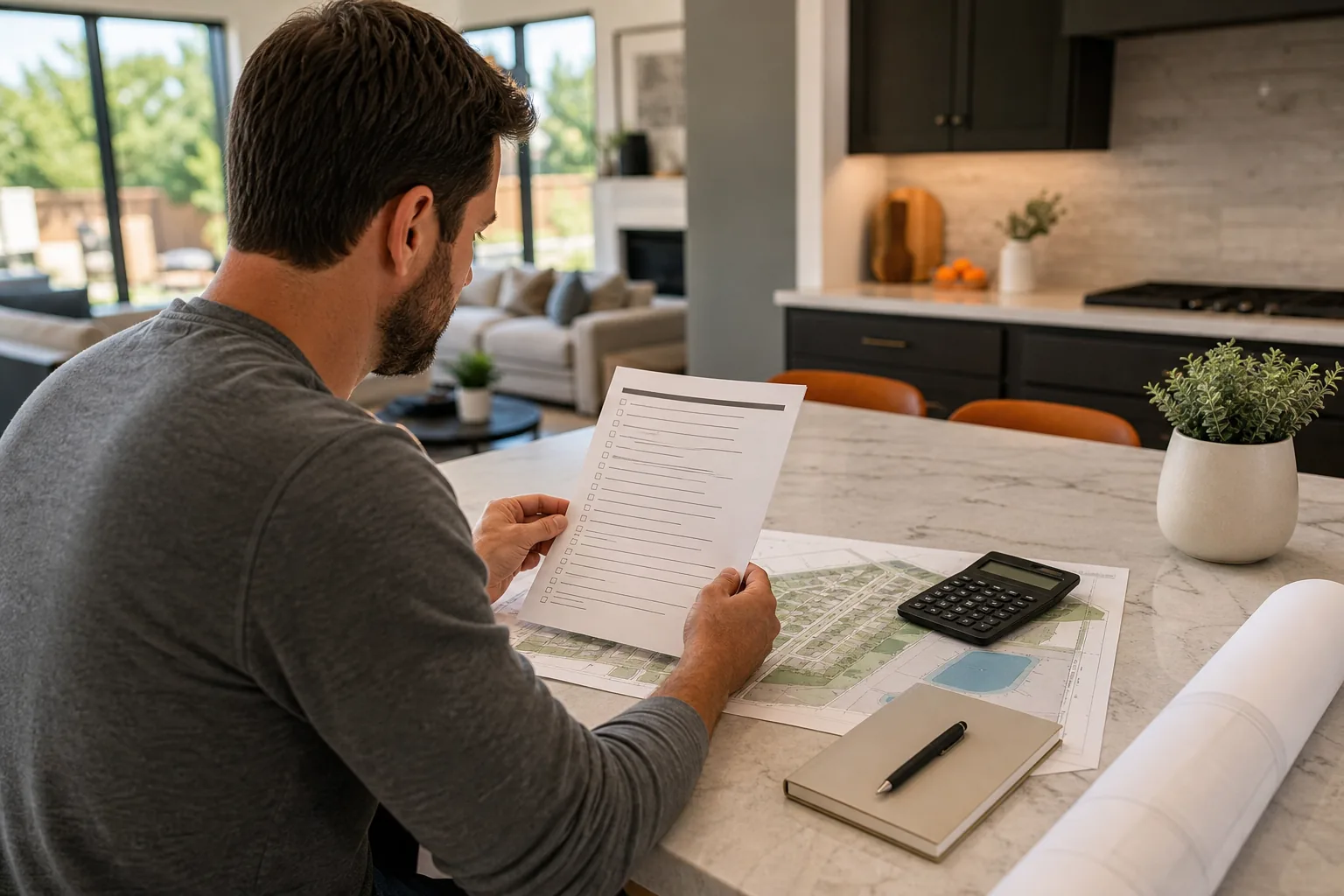
One more point: don't assume every builder publishes the same facts. Ask for clarification at your first meeting.
Step 2: Compare Austin Builders, Communities, and Available Homes
To compare builders for a new home in Austin, use the same questions at every community. A large model home can hide a small standard package. A lower base price can also grow fast after upgrades, lot charges, and closing costs.
Begin with the builder's written documents. Ask for the base price, current incentives, standard features, upgrade menu, estimated completion date, and warranty terms. Ask which items shown in the model are included. Get the answer in writing.
This is why the written terms matter. That doesn't prove every part of the buying process will go well. It does give you a term to inspect instead of a vague promise about quality.
Compare the community as closely as the house. Walk the route from the lot to the main road. Visit at a busy time if you can. Look for planned phases, open lots, drainage paths, power equipment, and streets that may change as building continues.
Highland Homes is described in a community walkthrough with walk-and-bike trails, green spaces, a luxury pool, and a workout center. Those details may appeal to a family that spends weekends at home. They may matter less to a buyer who cares most about a private office and a short commute.
It highlights smart home technology, which may fit buyers who want connected controls built into the home. Ask what that phrase means in the contract. A buyer needs to know the exact devices, wiring, setup, and support included.
Keep a scorecard with one row per community. Record the same facts every time:
- Base price and upgrade total
- Lot premium and estimated property tax
- Completion status and expected handover
- Warranty length and exclusions
- Monthly community fees
- Nearby future construction
- Commute time during your normal work hours
Don't rank a builder from the model alone. Rank the written offer, the lot, the contract, and the post-close terms as one package.
Step 3: Review Floor Plans, Features, and Builder Inclusions
When you review floor plans for Austin new construction homes, separate the drawing from the sales display. The floor plan shows the basic shape. The display home shows a finished version that may contain paid upgrades.
Ask for the standard feature sheet before choosing a plan. Mark every item as included, optional, unavailable, or unclear. Pay close attention to flooring, lighting, appliances, cabinets, counters, windows, insulation, garage finish, and outdoor work.
The 2026W House Plan illustrates the level of detail you should seek. Its description includes an open family room with a wall of windows, a corner walk-in pantry, and a kitchen island with built-in seating space. It also describes large windows in the primary suite. Those details help you judge how the rooms may work, but they don't replace a full inclusion list.
Use this table during a builder meeting. Fill missing items before you compare one offer with another.
| Decision area | Questions to ask | Why it changes the decision |
|---|---|---|
| Daily layout | Where will work, meals, storage, and guests fit? | A good room count can still produce a poor daily flow. |
| Standard package | Which features in the model come with the base home? | Upgrade totals can change the payment quickly. |
| Light and windows | Which windows face the street, a neighbor, or open land? | Views and privacy depend on the lot, not only the plan. |
| Kitchen use | Is the pantry size, island, and appliance package included? | Small changes affect storage and replacement costs. |
| Connectivity | What smart home devices and wiring are part of the contract? | “Smart home technology” is too broad without a list. |
| Warranty | What period applies to structure, systems, and workmanship? | The longest term may apply only to one part of the home. |
Read the contract beside the feature sheet. If the sales team says a feature is included but the paperwork does not say so, stop and ask for a revision. Memory won't help when you dispute a missing appliance after closing.
When Perry is on your shortlist, review its stated smart home technology inclusions. Your signed documents still control the purchase.
For the warranty, ask who handles the claim, how you submit it, what maintenance can void coverage, and whether coverage changes after the first year. Treat warranty terms as a prompt for questions, not as a reason to skip inspection.
Step 4: Inspect the Property and Verify Quality Before Closing
An inspection is still useful when the home is new. Austin new construction homes can have unfinished work, poor drainage, damaged finishes, or systems that need adjustment before you move in.
Hire an independent inspector who works for you. Don't rely only on the builder's walk-through. The inspector should review the structure, roof, foundation, exterior grading, plumbing, electrical system, heating and cooling, windows, doors, attic areas, and visible finishes.
Ask when the inspection should happen. A pre-drywall inspection can reveal framing, wiring, plumbing, and duct issues before walls hide them. A final inspection checks the finished home. If the builder allows it, use both stages.
During your own walk, test each room. Turn on every light. Run faucets. Flush toilets. Open windows. Check cabinet doors. Look at tile lines from several angles. Stand in the garage and listen for street noise. Take photos of each issue and tie them to a room.
Pay close attention to water movement. Walk the lot after rain if timing allows. Look for low spots near the foundation, water stains, soft soil, or downspouts that drain toward the house. A clean interior doesn't tell you how the lot handles a storm.
Build a punch list with three columns:
- Issue found
- Person responsible
- Proof of completion
Ask the builder to fix major defects before closing. For smaller items, agree on a written completion plan. Don't accept a verbal promise as the whole record.
The basic role of a home inspection is to assess the condition of visible systems and components. It isn't a guarantee that every hidden defect will be found. That distinction matters when you decide whether to add specialist checks.
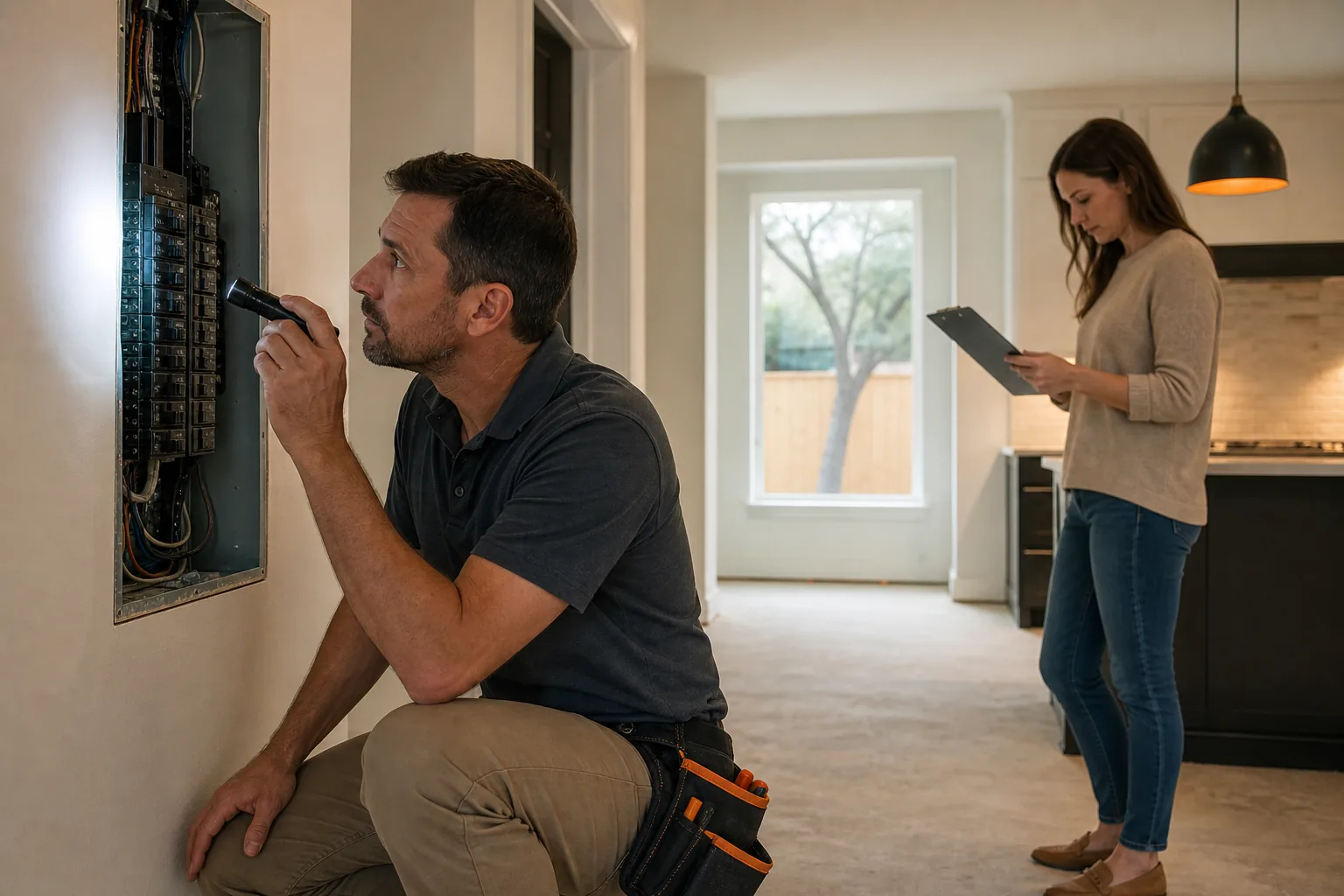
Keep all reports, photos, repair notes, and final sign-offs in one folder. If a warranty claim comes up later, a clear record can save time.
Step 5: Build the Full Budget and Complete the Purchase
The full cost of a new home is larger than the advertised base price. Build your budget around the final contract amount, estimated taxes, insurance, loan costs, closing charges, moving costs, and early repairs.
Start with a simple cash sheet. Add the deposit, down payment, inspection fees, appraisal, lender charges, title costs, prepaid taxes, insurance, and any required community fees. Then add a reserve for window coverings, furniture, tools, landscaping, and changes you didn't expect.
Ask the lender for a loan estimate and compare it with the builder's preferred lender offer. A builder incentive may reduce one cost while another fee stays higher. Compare the full cash-to-close figure and the full monthly payment.
Property taxes deserve their own line. The assessed value can change as the home is completed, and your first estimate may not match the final bill. Use a local tax estimate rather than assuming the model's payment is final.
Keep the contract review separate from the sales meeting. A real estate attorney or buyer's agent can help you spot deadlines, default terms, change-order rules, financing conditions, title issues, and the process for delaying closing when repairs remain.
Before signing the final papers, confirm:
- The legal description matches the lot you chose.
- The final price includes agreed upgrades and credits.
- Completion dates and delay terms are clear.
- Warranty documents name the covered work.
- Repairs from the punch list have proof of completion.
- Utilities, keys, access codes, and community rules are explained.
For SaaS founders, there is a useful operating lesson here. A home purchase is easier when each promise has an owner, a date, and a written result. That same habit shows up in the founder interviews on Profitable Founder Podcast, where the focus stays on the numbers and actions behind a business rather than broad advice.
Don't spend every dollar on the house itself. Keep cash for the first months after move-in. New construction can reduce some repair risk, but it won't remove every cost tied to ownership.
If you want a second peer group while you weigh a major purchase or grow a software business, Profitable Founder Podcast also runs the Profitable Founder Club for SaaS founders doing between $5K and $50K MRR. It isn't a real estate service, but the group's focus on clear decisions can fit the same operator mindset.
FAQ: Austin New Construction Homes
Are new construction homes in Austin worth buying?
New construction homes in Austin can be worth buying when the lot, contract, final cost, and warranty fit your needs. New materials don't remove the need for an inspection. Compare the standard features with the model, then add taxes, fees, upgrades, and maintenance reserves before deciding.
What should I ask an Austin home builder?
Ask an Austin home builder for the base price, upgrade list, lot charge, completion date, warranty terms, community fees, included appliances, and repair process. Also ask for the exact smart home features or amenities promised. If the answer isn't in the contract, request written confirmation before you sign.
Do I need an inspection for a new construction home?
Yes, you should get an independent inspection for a new construction home. A pre-drywall review can catch hidden framing, wiring, plumbing, or duct problems. A final inspection can find finish defects and system issues. The builder's walk-through is useful, but it doesn't replace an inspector who works for you.
Which Austin builder has the best warranty?
Perry Homes and Highland Homes do not provide warranty details in the cited material. Ask every builder what the term covers, when it starts, how claims work, and which exclusions apply.
How much should I budget beyond the home price?
Budget beyond the home price for taxes, insurance, lender and title costs, inspections, upgrades, moving expenses, community fees, and early home needs. The exact amount depends on your loan and contract. Ask for a full cash-to-close estimate, then keep a separate reserve after closing.
Conclusion
Choose the builder and community that fit your full budget, not the model with the best first impression. Get the inclusions, warranty, lot details, taxes, and repair plan in writing. Then book an independent inspection before your closing deadline. For the same clear, operator-led approach to SaaS growth, you can explore Profitable Founder Podcast after you finish your home comparison.
